Leaders who make room for frontline improvement.
A peer-led learning journey for hospital CEOs and senior management teams. Your frontline teams are already improving care with ACQUIRE. This course is about recognising that work, backing it, clearing the way and making it last.



What we know does not always reach the bedside
Across sub-Saharan Africa, quality is still approached mostly through assurance and accreditation.
Preventable harm, from infections to medication errors, continues not because of a lack of expertise or guidelines, but because weak systems fail to reliably turn knowledge into practice.
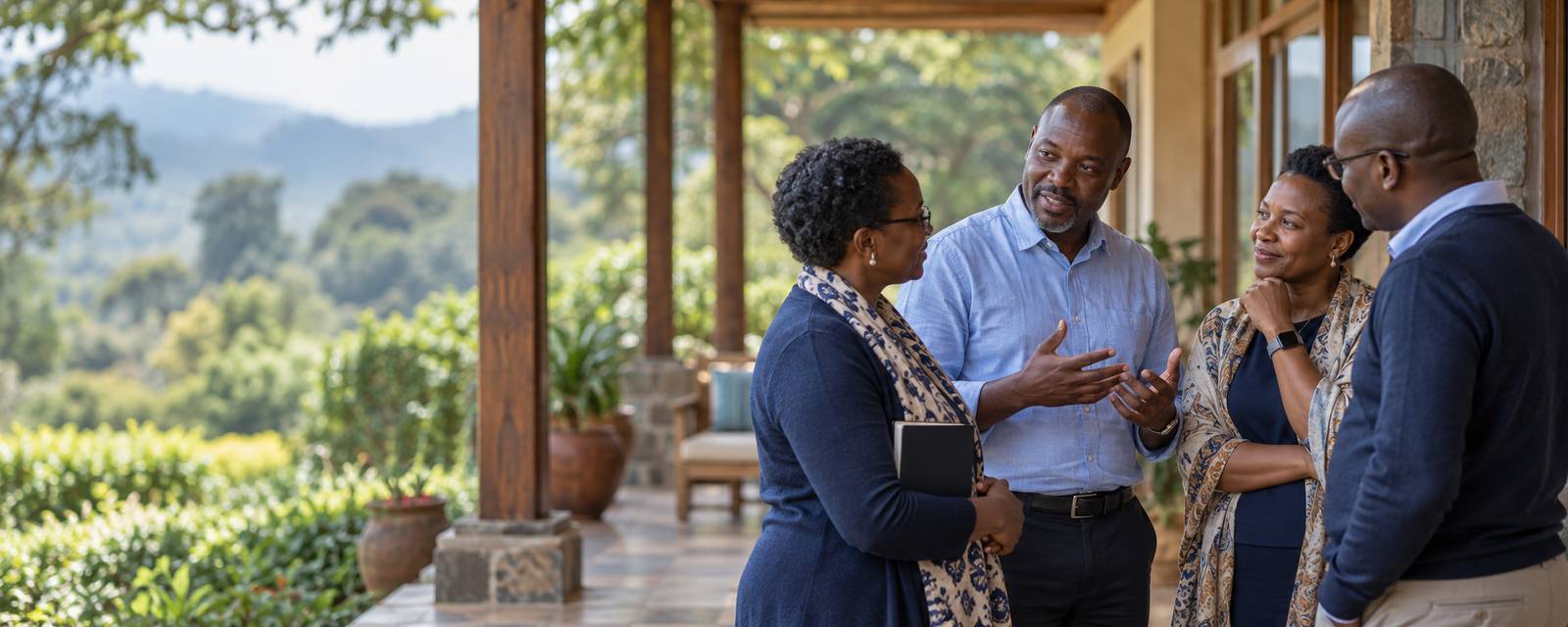
Improvement is most practical closest to care, at the frontline. But frontline teams cannot close the gap alone. Senior leaders decide whether a team's measure reaches the management agenda, whether staff get time to meet, and whether a tested change becomes the new standard.
preventable deaths in low- and middle-income countries are due to poor-quality care at health facilities.
Shared at the 2025 C-Suite closing sessionQuality as assurance
- An inspector checks records against a standard
- An annual audit reports last year's rate
- A policy is reissued after an incident
Quality as improvement
- A ward team tests a new handover checklist for two weeks
- Waiting times are plotted every week on a run chart
- Leaders ask what the data is teaching, not who is to blame
Five things a sponsor does for a frontline team
You do not need to be an expert in QI methods. Your team needs you to do five things well, in this order.
Recognise
Notice the improvement work already happening in your hospital.
Prioritise
Tie the team's aim to an institutional priority.
Support
Give the team what it needs to keep going.
Remove barriers
Clear the system obstacles the team cannot clear alone.
Scale and sustain
Turn a tested change into how the hospital works.
Where the CEO and senior management are engaged, teams finish. Where leadership changes or is stretched thin, even the most willing teams stall.
What ACQUIRE has seen across more than 120 hospital teams in 2026The top layer of one learning pathway
ACQUIRE trains every level of the hospital. The C-Suite course is Level 3 of the QI learning journey: for those who lead, influence and support others to keep improving.
Learners
Foundations of QI and patient safety, for everyone.
Team members
Frontline teams run a real A3 project with a trained coach.
Senior leaders
Executives sponsor the work and build a culture of quality.
Graduated projects
Improvements the institution now owns.
Figures from the ACQUIRE Learning Library, which covers 451 institutions in 15 countries.
Five weeks, five modules, one improvement project
Equipping senior executives with the clinical governance knowledge, QI methods and leadership to deliver measurable, lasting gains in quality and patient safety.
Performance management: using data for QI
Data literacy for decisions, meaningful quality metrics, PDSA cycles and clinical dashboards.
Theories of how change happens
Change models, adaptive versus technical change, resistance, and strategies for complex systems.
Professionalism and innovation in teamwork
Professional standards, multidisciplinary collaboration, breaking silos and leading innovation.
Leading under conditions of uncertainty
Adaptive leadership, decisions with incomplete information, crisis and keeping trust.
How leaders can inspire accountability
Accountability without blame, clear expectations, feedback and a culture of ownership.
Three things you will be able to do
- Apply the principles of clinical governance to drive continuous quality improvement and patient safety.
- Use core QI methods and tools with confidence, and build a culture in which QI teams thrive.
- Design and deliver a high-impact improvement project with measurable, sustainable results.
Read and reflect
A short pre-session reading and reflection.
Learn together
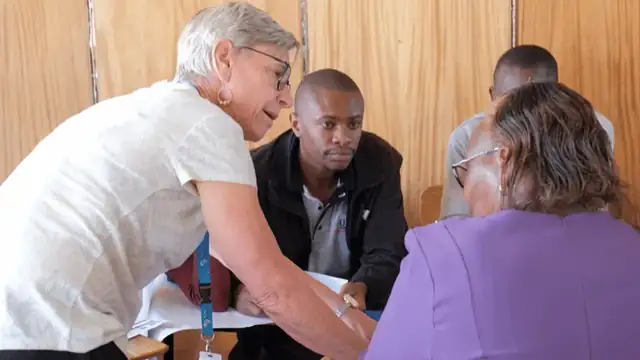
Theory, case studies and discussion. Everyone brings expertise.
Do together
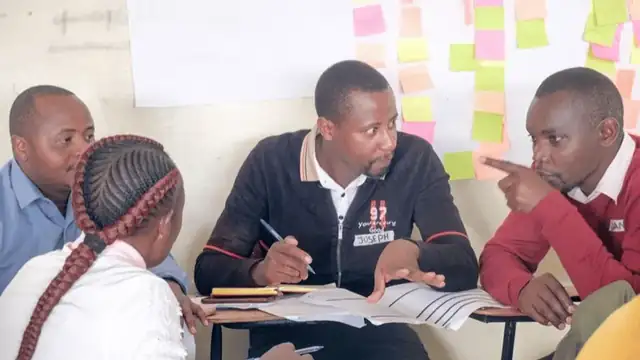
Small-group action learning on your own institutions.
Act
One action for your capstone, and a reflection within 48 hours.
One real problem, taken through the full improvement cycle
Scoped in week 1, then developed, tested and refined across the sprint. It tackles a quality or clinical governance need at your own institution, often alongside your frontline team.
- 1
Define
The problem, a SMART target and how you will measure it.
- 2
Understand
Root causes, a Pareto chart and a process map of how work really flows.
- 3
Test
Change ideas tried in small PDSA cycles, tracked on a run chart.
- 4
Sustain
A documented plan to hold the gain, presented at the showcase.
What leadership for quality builds
Five drivers shared at the 2025 C-Suite closing session. Together they create a culture of person-centred care that keeps improving.
Person and family engagement
Patients and families help shape care, not only receive it.
Staff engagement
Frontline staff are trusted to name problems and test solutions.
Improvement methods
Teams use the A3, PDSA cycles and process maps.
Measurement for quality
Data is collected over time and used to learn, not to blame.
Governance for quality
The board and senior team keep quality a standing item.
Built with the leaders who went first
The 2025 pilot brought together a CEO and a senior manager from each of seven Kenyan hospitals. Every one of those hospitals also had a frontline team in the Experiential cohort.
Kenyatta National Hospital
- Fluid prescriptions for newborns
- A clinical practice model for oncology
Coast General Teaching and Referral Hospital
- Faster discharge for insurance patients
- Faster turnaround in adult A and E
AIC Kijabe Hospital
- Reducing bedsores in medical-surgical wards
Mbagathi County Referral Hospital
- Reducing neonatal sepsis
M.P. Shah Hospital
- Reducing medication errors
Outspan Hospital
- Better cleaning in surgical wards
Pumwani Maternity Hospital
- Faster turnaround for caesarean deliveries
Browse every project and presentation
leaders · 7 hospitals · 9 frontline projects
"Dialogue sparks growth, turning experience into wisdom."2025 ACQUIRE C-Suite welcome letter
Inside the 2025 residential
Day 1
- On being a leaderLeading for quality and safety, and in a crisis
- Reflective practiceWhat? So what? Now what? and Gibbs' cycle
- What type of leader am I?
Day 2
- The habit of reflectionSelf-awareness through a case study
- Co-production with patientsPartnership in care design
- Pause, reflect and learnEach hospital presents its capstone
Leadership engaged in 2026
Co-producing health quality leadership: lessons from the C-Suite journey
Peter Lachman, Lydia Okutoyi and Mary Adam reflect on what the first cohort taught ACQUIRE about leading quality from the top.
Executive teams ready to back their frontline
Senior executives and C-suite leaders of hospitals and health management teams, ideally with a frontline team in the QI-PS Experiential Leadership Program.
What your frontline team will ask of you
- A signatureSign and return the formal participation letter.
- Your namesShare senior leadership contacts so we can invite you to key moments.
- Time to learnMake time for the A3 Foundational online course. Graduation requires it.
- Your presenceAttend the team's graduation presentation, with your management team.
- Your attentionAsk for a short project update at your management meeting.
What leaders and institutions take home
Results you can point to at your next board meeting, and a network to lean on after the course ends.
A completed improvement project
Measurable results on a real quality or safety need, with a plan to sustain them.
Clinical governance in practice
Working knowledge to strengthen quality and safety systems.
Confidence with QI tools
PDSA cycles, root cause analysis and data-driven tracking in everyday leadership.
A stronger culture of quality
QI teams that are supported, resourced and trusted to thrive.
A peer network
Senior leaders across the region to call on long after the course.
How we measure it
- Before and afterSelf-assessment of clinical governance and QI competencies
- Every weekReflections after each session
- Every weekProgress on capstone milestones
- Week 5Quality and safety outcomes at the showcase
- 3 to 6 months onFollow-up on sustained use and impact
Bring your executive team into the network
The 2027 cohorts are being assembled now. Tell us about your institution and your frontline team, and we will share dates and next steps.